Does melatonin help you sleep after a night shift?
On this page
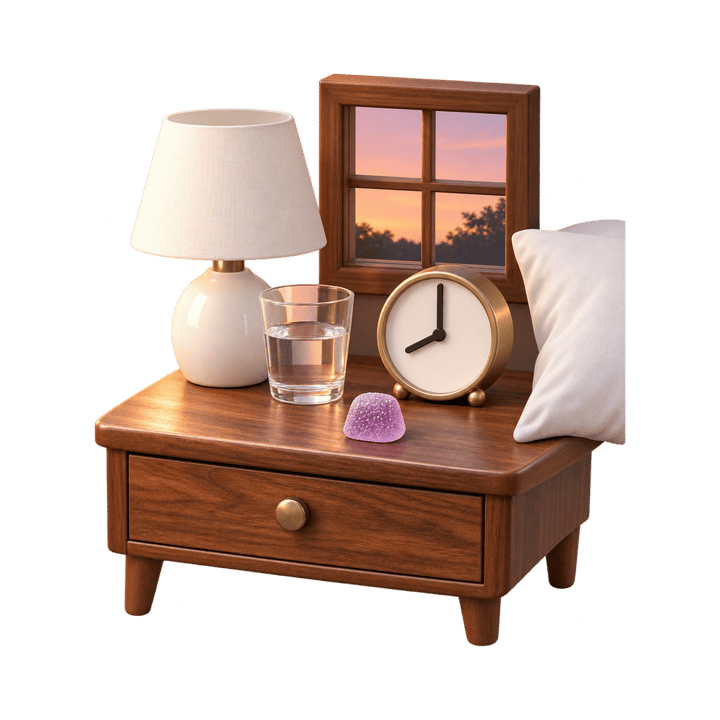
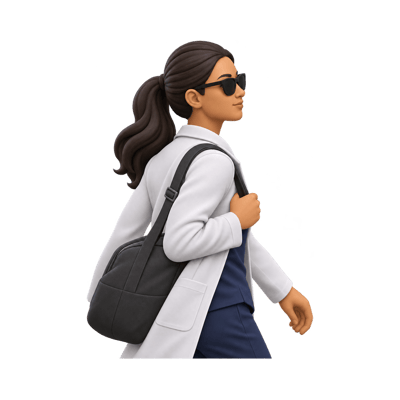
A little. In a 2014 Cochrane review of trials in shift workers, melatonin added about 24 minutes of daytime sleep after a night shift, on low-quality evidence, and didn’t help people fall asleep any faster. We’d start with a dark room and very dark sunglasses on the way home, and treat melatonin as a small extra.
After 12 hours on your feet, falling asleep at 9am should be easy. Often it isn’t, because your body clock still thinks it’s morning. Daylight on the drive home tells it the same thing, and so does a bright bedroom.
We’d fix the light first, with the same sleep hours every work day, a blacked-out bedroom, and very dark sunglasses on the way home if they’re safe for your drive. If you try melatonin, take the smallest dose you can find, 0.5 to 1 mg, once you’re home and before your day sleep, never before driving. On days off, it has no role.
Day sleep after a night shift is like swimming upstream. You can get there, but the current is your own body clock telling you it’s morning.
What the trials found
The 2014 Cochrane review pulled together 15 randomized trials with 718 shift workers, 9 of them on melatonin. Melatonin was linked with about 24 minutes more daytime sleep after the shift, but not with falling asleep faster, and the reviewers rated the evidence low quality. A second 2014 review, of 8 studies with 300 participants, found the results inconclusive and made no recommendation.
Why we’d start with light
Light at the eyes holds back melatonin and moves your body clock. In a 2011 study, ordinary room light during the usual hours of sleep cut people’s melatonin by more than half in 85 percent of the tests. Morning light pulls your clock earlier, which is the opposite of what a night worker going to bed at 8:30am needs. That’s why Eastman and Burgess’s jet lag advice uses very dark sunglasses and a dark bedroom or eye mask to block light at the wrong hour, and the same tools work after a shift.
A shift, worked through
Say you work 7pm to 7am and get home at 7:45am in daylight.
- Sunglasses on from the door at work all the way home, if it’s safe to drive in them.
- In bed by about 8:30am, in a room as dark as you can make it.
- Sleep until about 3:30pm, the same hours every work day.
- If you take melatonin, 0.5 to 1 mg once you’re inside, and never before you drive.
Will it mess with your own melatonin?
Not in the study that measured it. In 1997, 21 night shift workers took 0.5 mg or a placebo at bedtime for a week, and their own melatonin came back at the same height.
If you’re too sleepy to drive home, don’t drive. Don’t drive after a dose, either. Put your shift into the planner below for your own day-sleep block and light plan.
Plan your day sleep
- Your shift
- Your day sleep
- Your own melatonin
 Sleep 8:30am to 3:30pm, the same hours every work day. Home at about 7:45am, in bed 45 minutes later.
 Make the room dark. Blackout blinds or an eye mask, because daylight on the eyes tells your clock it's day.
- Very dark sunglasses on the way home, if they're safe for your drive. Morning light would pull your clock the wrong way before your day sleep.
 If you try melatonin: the smallest dose you can find, 0.5 to 1 mg, once you're home at about 7:45am, before the day sleep, and never before driving. On days off and nights you sleep at night, it has no role.
The size, said plainly: in trials melatonin added about 24 minutes of daytime sleep, on low-quality evidence, and didn't help people fall asleep faster.
If you're too sleepy to drive home, don't drive. Don't drive after a dose. Your own melatonin is drawn from a free-day wake time of 8:00am, set on the melatonin window. The 7 hour block and the 45 minutes are the plan's example, not a rule.
6 sources
- Liira J and others, Pharmacological interventions for sleepiness and sleep disturbances caused by shift work, Cochrane 2014, summarized in JAMA, 2015pubmed.ncbi.nlm.nih.gov
- National Center for Complementary and Integrative Health, Melatonin: What You Need To Know, last updated May 2024nccih.nih.gov
- Eastman CI, Burgess HJ, How to travel the world without jet lag, Sleep Medicine Clinics, 2009pubmed.ncbi.nlm.nih.gov
- Gooley JJ and others, Exposure to room light before bedtime suppresses melatonin onset and shortens melatonin duration in humans, Journal of Clinical Endocrinology and Metabolism, 2011pubmed.ncbi.nlm.nih.gov
- Khalsa SBS and others, A phase response curve to single bright light pulses in human subjects, Journal of Physiology, 2003pubmed.ncbi.nlm.nih.gov
- Matsumoto M and others, The amplitude of endogenous melatonin production is not affected by melatonin treatment in humans, Journal of Pineal Research, 1997pubmed.ncbi.nlm.nih.gov