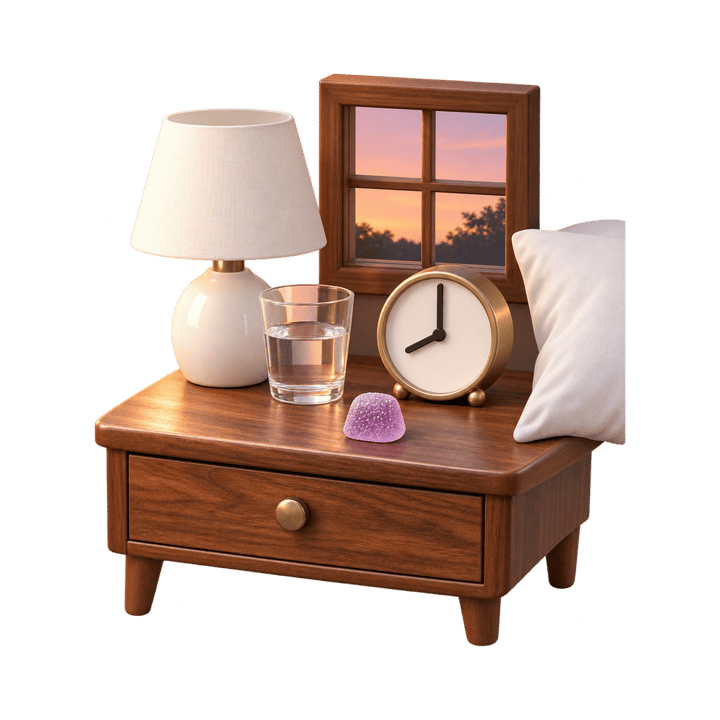
Melatonin after a night shift
Put in your shift. The ring turns to your hours and leaves your own melatonin where your body put it, so you can see what the plan is working against.

- Your shift
- Your day sleep
- Your own melatonin
 Sleep 8:30am to 3:30pm, the same hours every work day. Home at about 7:45am, in bed 45 minutes later.
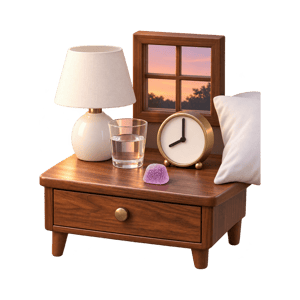
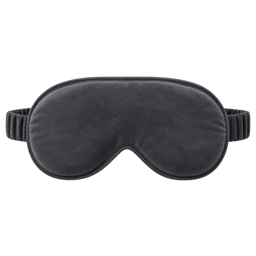 Make the room dark. Blackout blinds or an eye mask, because daylight on the eyes tells your clock it's day.
- Very dark sunglasses on the way home, if they're safe for your drive. Morning light would pull your clock the wrong way before your day sleep.
 If you try melatonin: the smallest dose you can find, 0.5 to 1 mg, once you're home at about 7:45am, before the day sleep, and never before driving. On days off and nights you sleep at night, it has no role.
The size, said plainly: in trials melatonin added about 24 minutes of daytime sleep, on low-quality evidence, and didn't help people fall asleep faster.
If you're too sleepy to drive home, don't drive. Don't drive after a dose. Your own melatonin is drawn from a free-day wake time of 8:00am, set on the melatonin window. The 7 hour block and the 45 minutes are the plan's example, not a rule.
What your plan means
The block is the plan. Sleeping at the same 7 hours after every shift gives your clock one fixed night to hold on to, even if it's in the middle of the day. Black out the room and keep the block on your days in a row.
The drive home is where the day starts. Morning light on the way home tells your clock it's day, so very dark sunglasses on the walk or drive help, as long as you can still see well enough to drive safely.
Melatonin is the small part. In trials it added about 24 minutes of day sleep and didn't help people fall asleep faster. If you try it, take 0.5 to 1 mg once you're home, before the block, and never before you drive. On days off it has no role.
Sleep blocks for common shifts
| Shift | Home by | Day sleep |
|---|---|---|
| 7pm to 7am | 7:45am | 8:30am to 3:30pm |
| 10pm to 6am | 6:45am | 7:30am to 2:30pm |
| 11pm to 7am | 7:45am | 8:30am to 3:30pm |
| 6pm to 6am | 6:45am | 7:30am to 2:30pm |
| 9pm to 7am | 7:45am | 8:30am to 3:30pm |
A shift, worked
Nights 7pm to 7am, home at 7:45am in daylight. Sleep 8:30am to 3:30pm in a blacked-out room, sunglasses on the walk from the car, and if you take it, 0.5 to 1 mg once inside.
How much melatonin does here
In trials after night shifts, melatonin added about 24 minutes of daytime sleep, on low-quality evidence, and didn't help people fall asleep faster. Very dark sunglasses on the way home and a dark bedroom keep morning light from telling your clock it's day. On days off, and on nights you sleep at night, melatonin has no role.
If you're too sleepy to drive home, don't drive. The 7 hour block and the 45 minutes between getting home and sleep are the plan's example, so set your own.
3 sources
- Eastman CI, Burgess HJ, How to travel the world without jet lag, Sleep Medicine Clinics, 2009pubmed.ncbi.nlm.nih.gov
- Liira J and others, Pharmacological interventions for sleepiness and sleep disturbances caused by shift work, Cochrane 2014, summarized in JAMA, 2015pubmed.ncbi.nlm.nih.gov
- Gooley JJ and others, Exposure to room light before bedtime suppresses melatonin onset and shortens melatonin duration in humans, Journal of Clinical Endocrinology and Metabolism, 2011pubmed.ncbi.nlm.nih.gov