
What is melatonin?
On this page
Melatonin is a hormone your brain releases as it gets dark, to tell your body it’s night. A tablet is the same molecule, so taking one sends that message early. It gives a small push toward sleep and a bigger push to your body clock.
Most people meet it as a gummy in the sleep aisle, which is a strange home for a time signal. Once you see it as a message about the hour, it makes sense that the hour you take it changes what it does, that you need very little, and that the lamp next to you can undo it.
What we’d do
Use melatonin to tell your body when night starts, and use it the way your brain does, with a small amount, hours before bed, in dim light. Don’t expect it to knock you out. If you want a sleeping pill, that’s a talk with your doctor, and melatonin isn’t one of the drugs sleep doctors suggest for long-term insomnia.
If you remember three things
- Darkness turns it on and light turns it off. Your brain’s clock watches the light at your eyes and lets melatonin out after dark.
- It does two things. A small push toward sleep, about 7 minutes faster on average, and a shift in your body clock if it’s timed right.
- A tablet is the same molecule. 0.3 mg is enough to bring your blood to about a normal night’s level.
Why do people think it’s a sleeping pill?
Because it does make you sleepy, a little, and because it’s sold as one. The bottle says sleep, it sits beside the sleep aids, and the instructions say bedtime.
The sleepiness is real. In 1994 a team at MIT gave 20 men doses from 0.1 mg to 10 mg at 11:45 in the morning, when melatonin levels are normally low. At 1:30pm each man lay back in a quiet dark room with his eyes closed, holding a pressure switch in each hand. When he dozed off, his grip let go. Every dose, even 0.1 mg, made the men drop off faster and stay asleep longer than a placebo, and made them feel sleepier. It also lowered their temperature and made them miss more on a listening test.
The researchers suggested the body’s own rise in melatonin around 9pm might be one of the signals that starts sleep. At night, though, your own melatonin is already up. In trials of melatonin taken around bedtime, people fell asleep about 7 minutes faster on average.
A simple way to picture it
Think of the house lights dimming before a show. The dimming doesn’t start the play. It tells the whole room the play is about to start, and people put their phones away and settle into their seats.
Melatonin is the dimming, sent through your blood to every part of your body that keeps time. A tablet is someone dimming the lights early, and the room settles sooner. If you dim them right as the curtain goes up, the audience barely notices.
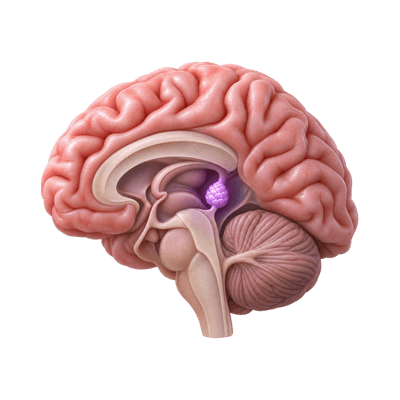
How does your body make it?
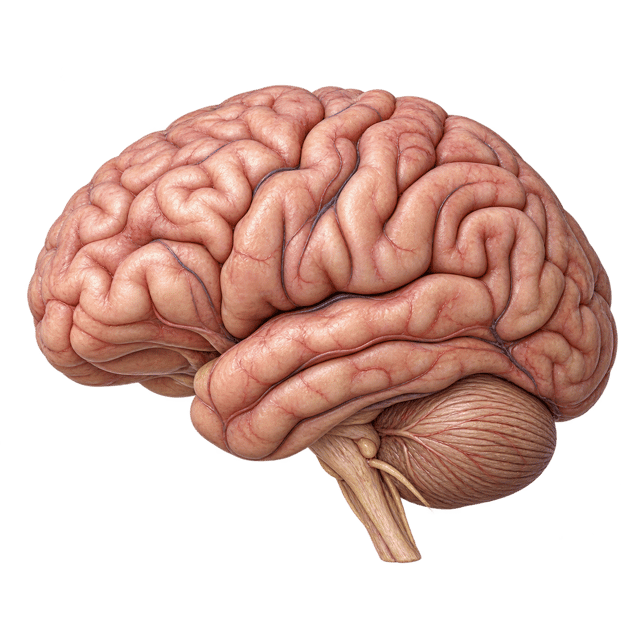
- Light reaches your eyes. Your brain’s master clock, a cluster of nerve cells called the suprachiasmatic nucleus, uses the light your eyes take in to keep time with the day.
- The clock gives the order. In the evening it tells your brain to make more melatonin. The maker is a small gland in the brain called the pineal gland.
- Melatonin goes into your blood. Levels rise in darkness and fall in daylight, so the amount in your blood tells the rest of your body roughly what time of night it is.
- Light stops it. Bright light at night can block melatonin production, which is why every dose comes with a light plan.
The order from the clock reaches the gland through nerve endings that work on beta receptors, the same receptors beta blocker drugs block. In a 1999 study of 15 healthy volunteers, one dose at 6pm of the active form of propranolol, a beta blocker, cut their overnight melatonin output by 80 percent, and the active form of atenolol cut it by 86 percent. Carvedilol, a beta blocker that also blocks alpha receptors, made no clear difference. Sleep trouble is a known side effect of beta blockers, and the researchers think less melatonin may be part of the reason. If you take one, keep taking it as prescribed and raise sleep with your prescriber.
The model holds for people who sleep at night. In night workers and travelers the clock and the sun disagree, which is where a tablet does its most useful work.
What does a tablet add?
The melatonin in a supplement is usually made in a lab and is chemically the same as yours. Very little of it survives the trip. In a 2016 study in Copenhagen, 12 men took 10 mg by mouth and on another day 10 mg straight into a vein. Only about 3 percent of the swallowed dose reached their blood.
That’s still a lot of melatonin. Doses of 0.1 and 0.3 mg brought blood levels into the normal range for a night, so a 10 mg tablet starts about 33 times above a normal night’s peak. Why less is often enough has the numbers.
A tablet then does two things:
- A small push toward sleep. Across 19 trials with 1,683 people, it cut the time to fall asleep by about 7 minutes. When machines measured sleep, it was 5.5 minutes. When people judged it themselves, it was 10.7. The effect didn’t fade with weeks of use.
- A shift in your clock. Taken a few hours before your own melatonin starts, 0.5 mg moved the clock earlier as far as 3 mg did. Taken just after waking, it moved the clock later. Why the hour changes the direction explains how.
We’re confident about the second one when the timing is right. The first is real but small, and it’s where most people’s expectations are.
What is it good for?
| What you want | Does it help? | What the research found |
|---|---|---|
| Get over jet lag | Yes, after 5 or more time zones | 9 of 10 trials found it reduced jet lag when taken at bedtime at the destination |
| Move a late bedtime earlier | Yes, with a fixed bedtime | In 116 late sleepers, sleep came 34 minutes earlier than on placebo after 4 weeks |
| Fall asleep faster | A little | About 7 minutes faster on average |
| Sleep after a night shift | A little | About 24 minutes more day sleep, on low-quality evidence |
| Stay asleep | A little, as slow-release, in older insomniacs | A 2 mg slow-release tablet helped them stay asleep in a 1995 study |
| Long-term insomnia | Sleep doctors suggest not | The American Academy of Sleep Medicine’s 2017 guideline suggests doctors don’t use it for this, a weak recommendation |
| Sleep in older people with dementia | Sleep doctors recommend against it | The same academy’s 2015 guideline |
Melatonin may do other things in the body too. The US National Center for Complementary and Integrative Health says research suggests it plays roles beyond sleep, but those aren’t well understood.
If it’s only 7 minutes, why do I feel it?
The sceptic says
It works for me. I take it, I get drowsy, I fall asleep. Seven minutes can’t be the whole story.
The reply
You may be right, and you can check. Every dose in the MIT study made people feel sleepier, so the drowsiness is real. But people who judged their own sleep reported almost twice the gain that machines measured. The only way to know what it does for you is your own nights on it against your own nights off it. The two-week test does that.
14 sources
- National Institute of General Medical Sciences, Circadian Rhythms, last updated May 20, 2025nigms.nih.gov
- National Center for Complementary and Integrative Health, Melatonin: What You Need To Know, last updated May 2024nccih.nih.gov
- American Heart Association, Long-term use of melatonin supplements to support sleep may have negative health effects, news release, November 3, 2025newsroom.heart.org
- Dollins AB and others, Effect of inducing nocturnal serum melatonin concentrations in daytime on sleep, mood, body temperature, and performance, PNAS, 1994pubmed.ncbi.nlm.nih.gov
- Stoschitzky K and others, Influence of beta-blockers on melatonin release, European Journal of Clinical Pharmacology, 1999pubmed.ncbi.nlm.nih.gov
- Andersen LP and others, Pharmacokinetics of oral and intravenous melatonin in healthy volunteers, BMC Pharmacology and Toxicology, 2016pubmed.ncbi.nlm.nih.gov
- Ferracioli-Oda E, Qawasmi A, Bloch MH, Meta-analysis: melatonin for the treatment of primary sleep disorders, PLoS One, 2013pubmed.ncbi.nlm.nih.gov
- Burgess HJ, Revell VL, Molina TA, Eastman CI, Human phase response curves to three days of daily melatonin: 0.5 mg versus 3.0 mg, Journal of Clinical Endocrinology and Metabolism, 2010pubmed.ncbi.nlm.nih.gov
- Herxheimer A, Petrie KJ, Melatonin for the prevention and treatment of jet lag, Cochrane Database of Systematic Reviews, 2002pubmed.ncbi.nlm.nih.gov
- Sletten TL and others, Efficacy of melatonin with behavioural sleep-wake scheduling for delayed sleep-wake phase disorder, PLoS Medicine, 2018pubmed.ncbi.nlm.nih.gov
- Haimov I and others, Melatonin replacement therapy of elderly insomniacs, Sleep, 1995pubmed.ncbi.nlm.nih.gov
- Liira J and others, Pharmacological interventions for sleepiness and sleep disturbances caused by shift work, Cochrane 2014, summarized in JAMA, 2015pubmed.ncbi.nlm.nih.gov
- Sateia MJ and others, Clinical practice guideline for the pharmacologic treatment of chronic insomnia in adults, Journal of Clinical Sleep Medicine, 2017pubmed.ncbi.nlm.nih.gov
- Auger RR and others, Clinical practice guideline for the treatment of intrinsic circadian rhythm sleep-wake disorders, update for 2015, Journal of Clinical Sleep Medicine, 2015pubmed.ncbi.nlm.nih.gov